31 augustus 2013

Philosophical quotes from the beginning of Photography ... (1839 - 1900)

Every now and then there is a discussion about "art and photography" on one of the APUG forums. Sometimes interesting, sometimes only dogmatic opinions without an open eye or ear for anything outside ones "thinking window". 
 I never want to take part in such a discussion since there will never be a winner. I would rather sit down, having a nice coffee together, and really talk about what's on your mind or heart ...

 I was thinking of these never ending discussions (even fights?), that seem to be almost 175 years old, when reading this book:
"A new art: photography in the 19th century - the photo collection of the Rijksmuseum, Amsterdam" (Netherlands), Vol. I, published in 1996. A beautiful book with very nice prints of photographs from 1839 - 1900.

 (ISBN: 90-5349-193-7, Dutch title: "Een nieuwe kunst: fotografie in de 19de eeuw")

 There were two nice quotes I would like to share with a smile:

 The first quote was published in 1839 in an art magazine in The Netherlands, called: "Algemeene Konst- en Letterbode", discussing this new phenomenon - photography:
 "The new art of generating Drawings by Sunlight (Photography)" (taken from the preface of the book)

 For this second quote, I copied also a small part of the text as an introduction (bare with me):
 "During the second half of of the nineteenth century it was not uncommon for Dutch artists to work after photographs. However, this practice was not usually spoken of in private, let alone discussed openly in print,for photography was all too often seen as "unartistic". This is clear from the results of a survey carried out in 1900 among a group of artists. The response was limited, and there was only one artist who had anything positive to say about the artisticity of the photographic of the photographic technique. That man was Philippe Zilcken (1857-1930) of The Hague: painter etcher, and writer on art. 
 "For me photography is most certainly an art, for the qualities which raise a work to the level of art, i.e., personal opinion, choice, taste, emotion together with knowledge - are all indispensible (= indispensable??) in the creation of a beautiful photograph. The camera is a machine, but the passion and sensitivity of the photographer are capable of influencing the mechanical process. In this way a seemingly impersonal technique can contribute to the creation of a true work of art." (taken from page 256-257) 

 This statement from Zilcken reminds me of my personal motto, taken from a quote of Ansel Adams:
 " ... avoiding the common illusion, that creativity depends on equipment alone ... " (from Adams book: The Camera).

 I'm not trying to start a new old discussion here (please don't), but if you know an other striking or interesting remark from the old days (from before the 1930's) you're welcome to share it here. And if you would like a nice coffee with it, give me a call ;-)


BTW:
I was reading this book while listening (among others) to: "Agnus Dei" (Dunedin Consort), "Fifth of Firth" (Genesis), "Bombay Calling" (It's A Beautiful Day), "A Brother's Prayer" (The Holmes Brothers), "Koyaanisqatsi" (Philip Glass) and "Erbarme Dich" (from the St. Matthew Passion (Bach), Dunedin Consort).
 All very different, but all art (to me).

25 mei 2013

Pinhole images for WPPD2013


The Worldwide Pinhole Photography Day was this year on April, 28th (always the last Sunday in April). 
I finally had my three films developed. I used two cameras: an Agfa Click and an old Gevabox. 
(camera: Agfa Click)
(camera: Gevabox 6x9)
I converted both cameras into pinhole cameras myself. The Gevabox is very nice for portrait and landscape images and gives 6x9 cm negatives. The Click has 6x6 cm negatives, a rather short focal length and some nice vignetting (like a trademark) because of the original lens mount. 

I used 120 roll film: Konica PRO 400 and Fuji NPC 160. All films had standard C-41 developing in a lab.

Here are the images, which one do you like best?

Agfa Click series with Konica PRO 400: 
(image # 1)
(image # 2)
(image # 3)

Gevabox series with Fuji NPC 160:

(image # 4)
(image # 5)
(image # 6)
(image # 7)

Gevabox series with Konica PRO 400:
(image # 8)
(Image # 9)


20 mei 2013

Pocket Light Meter app: suitable for pinhole photography


Normally I calculate my exposure times for pinhole photography by "guesstimation", especially when I use my converted Gevabox or Agfa Clack. 

But sometimes I want to measure the light more securely. When I didn't bring my real light meter, I use the Pocket Light Meter app on my iPhone (also available for android). This app has a minimal ISO setting as low as 0.8 and maximum aperture as high as f/512. This makes this app very usefull for pinhole photography and for using photo paper as a negative. And it is very accurate too. I compared it with my digital camera. 

The app is free (with small add in the top of screen) or only $1.00 for the add free version. See for info:
http://www.pocketlightmeter.com.
(screenshots from the app)

The app has some nice features. It shows also the EV values, if desired. And you can "HOLD" the screen - holding your last reading. You can also take a small snapshot to log the used settings - and add some notes. Here is an example (jpg, 150 KB):


(sample of a snapshot made with the app)

The app can also sync with Dropbox to save the snapshots for later. Coming back home you can check the snapshots to see what settings you used when & where: the file names show date & time stamp. 
 Here you'll find a small test of this app.

20 april 2013

How B&W pictures turned into color images in the 1930's

~ later version recorded in 1938 ~
(Calvin and Hobbes by Bill Watterson, © Universal Press Syndicate)

It isn't easy to teach children the history of photography and explain why the world used to be only black and white photography.

For those of you who want to educate the youngsters in the real history of photography, here is the dialogue:

CALVIN: Dad, how come old photographs are always black and white? Didn't they have color film back then?
CALVIN'S DAD: Sure they did. In fact, those old photographs are in color. It's just the world was black and white then.
CALVIN: Really?
CALVIN'S DAD: Yep. The world didn't turn color until sometime in the 1930s, and it was pretty grainy color for a while, too.
CALVIN: That's really weird.
CALVIN'S DAD: Well, truth is stranger than fiction.
CALVIN: But then why are old paintings in color?! If the world was black and white, wouldn't artists have painted it that way?
CALVIN'S DAD: Not necessarily, a lot of great artists were insane.
CALVIN: But ... but how could they have painted in color anyway? Wouldn't their paints have been shades of gray back then?
CALVIN'S DAD: Of course, but they turned colors like everything else in the '30s.
CALVIN: So why didn't old black and white photos turn color too?
CALVIN'S DAD: Because they were color pictures of black and white, remember?

(CUT TO: EXT. Tree limb, Calvin talking with Hobbes)

CALVIN: The world is a complicated place, Hobbes.
HOBBES: Whenever it seems that way, I take a nap in a tree and wait for dinner.


~ original version from before 1930 ~
(Calvin and Hobbes by Bill Watterson, © Universal Press Syndicate)

20 maart 2013

What is your favorite or most influential photography book?

I was asked this question in a Linkedin phtotography group. This is my answer:

1) The Ansel Adams trilogy: The Negative, The Camera & The Print. (Even if you only use a digital camera, read these books!) 

(the three books by Ansel Adams)

2) Domestic Landscapes by Bert Teunissen.
(book cover of Domestic Landscapes)

See: www.bertteunissen.com for his beautiful series of images from all over Europe: 

(photo: Beuningen # 1 - by Bert Teunissen)

I saw his pictures in a museum in Amsterdam in 2007 and bought the book.

It inspired me to make a "domestic landscape" portrait of my parents and it's the best portrait I have of them.

3) Barry Thornton - Edge of Darkness. I haven't read this book yet, but it is in the mail to me from the UK right now.

I've heard a lot about Barry Thornton and I'm looking forward to reading his book myself.
(book cover of Edge of Darkness)

4) William Crawford - The Keepers Of Light. This is the "standard work" about alternate early photographic processes, like cyanotype, carbon printing, gum printing, bromoil, Van Dyke Brown, salt printing, albuminen, etc.

(book cover of The Keepers Of Light)


18 maart 2013

Pumkin Pinhole Camera


Have an extra pumpkin lying around? Put it to good use — to take photographs!
(pinhole photo by Danielle Hughson)

1 maart 2013

Finally: the Harman TiTAN 8x10 inch Pinhole Camera


The new Harman TiTAN 8x10 inch Pinhole Camera should be available from March 4th, 2013. It will be formally announced on Sunday at the Focus on Imaging show in Birmingham, UK, and available shortly after (through http://www.ilfordphoto.com). It is expected to cost about £400 (Wow!).

It is rather a large beast compared to the previous 4x5 inch TITAN pinhole camera.
(Photo: techcentral.my)

The concept of the 8x10 inch version is the same as the 4x5 inch version.
(parts of the 4x5 inch version)

Leon Taylor (from filmwasters) got his hands on an early pre-production model and made a nice film about his first tests on the cold coasts of Kent.
You can view his video (12 minutes) on Vimeo: http://vimeo.com/60680136
"This special edition of the filmwasters video podcast features the new Harman Titan 8×10 pinhole camera. Leon got his hands on a pre-release camera to put through its paces and see what this over-sized beastie can do."
(Mike Walker & Leon Taylor holding the 8x10 - photo: Leon Taylor)

For more (coming) info, check also these sites once in a while:
http://tinyurl.com/pinhole group
and
http://www.apug.org/forums/forum62/116152-harman-titan-8x10-pinhole-camera-review.html
and
http://filmwasters.com/podcast/archives/258.

24 februari 2013

Interesting film about Ansel Adams (1957, 20 min.)

I found this interesting film from 1957 about Ansel Adams, telling about his work, on Youtube.

(Ansel Adams standing on his car shooting Large Format)
It's an old 16 mm documentary (in B&W) on Ansel Adams with commentary from Ansel himself. He tells about his practices and views on photography. It's nice to see his equipment, his home and his interests from almost 60 years ago! A small piece of Photography History ;-)

Ansel Adams wrote several books. I would like to mention his trilogy: The Negative, The Camera and The Print. A must read; even if you only use digital cameras! These books are still in print.

(the covers of his trilogy)

One of my favourite quotes from Ansel Adams:

" ... avoiding the common illusions that creativity 
depends on equipment alone ... "
(quote from his book: The Camera)

I have one of the lenses Ansel Adams liked to use: a Kodak Commercial Ektar 10". You can see the lens in the film at 4.00 minutes on his 8x10" camera.


(Kodak Commercial Ektar 10" f:6.3)

17 november 2012

Carbon Printing - a beautiful and old photographic technique from the 19th century


I followed a course in carbon printing in Middelburg, The Netherlands at Polychrome (Kees Brandenburg).
Carbon printing is an old photographic procedure, in which carbon black (lamp black) was used for making black & white prints. This technique is (probably) developed by Alphonse Poitevin in 1855. This technique was adapted in 1868 by Louis Arthur Ducos du Hauron into color printing with pigments. These techniques were commonly used well into the middle of the 20th century. 
carbon print van Mark Sink, "The Great Sand Dunes #7"
(carbon print by Mark Sink, "The Great Sand Dunes #7")
Carbon printing is - besides gum printing - one of the most durable and lasting printing techniques. The carbon prints will stand out as if they were made yesterday among all kinds of prints from the 19th century available in foto archives.
How does carbon printing work? A sheet of paper is coated with a layer of pigmented gelatin. When the paper has dried it is made sensitive to light with dichromate (applied with a brush). After the paper has dried again, it can be exposed by contact printing with a negative. The exposed paper is then put under water and it makes contact with an other sheet of paper: the final carrier of the image. Some light pressure is applied to this sandwich for some time. When removing the sandwich from the water, keep the sandwich together and wash it gently in warm water. The original sheet of paper will come lose from the pigmented layer: it is now transferred to the new sheet of paper. This sheet with the image is now washed with cold water and will harden.
This technique is still taught in The Netherlands in Middelburg by Kees Brandenburg. 
There is an english forum about carbon printing.
A free english handbook (100 pages) can be downloaded here: www.carbonprinting.com.

carbon print van Albert Octavus Knoblauch - Pitch and Toss  - 1909
(Pitch and Toss - carbon print by Albert Octavus Knoblauch from 1909)

14 november 2012

Pinhole body cap for Nikon & Canon

I  found a nice and well made pinhole body cap for Nikon and Canon. 
(Body cap with pinhole for Nikon)

(Body cap with pinhole for Canon)
It has a very nice metal pinhole (laser drilled, 0.2 mm) incorporated into the cap. 

I'll make some tests shortly.

4 november 2012

My first pinhole image ever (2001)

This is the very first pinhole image I have made in my backyard in 2001:
(my vert first pinhole image)

I had build me my first wooden pinhole camera and loaded it with Ilford photographic paper. Exposure time was 30 seconds. The camera is made of Afzelia wood, size 11 x 11 x 11 cm. The negative size is 10 x 10 cm. The pinhole was made out of a soda can (pinhole size 0,3 mm). I had a lot of fun building it. And I was very pleased that my first test shot (picture above) was a success. The beginning of a pinhole camera building career ;-)


(my daughter standing still for 30 seconds)
This is an image of my daughter (3 years old) trying to hold still for 30 seconds in June 2003 (paper negative). This test shot was made with an old Gevabox from 1951, I converted into a pinhole camera. Negative size 6x9 cm on 120 rollfilm Kodak Tri-X.


(the original Gevabox model from 1951)


18 oktober 2012

DIY pinhole camera projects - building your own!

Here are some nice pinhole camera projects. 
Get inspired and get out there!

"Have fun and catch a light beam"
- - - - - - - - - - - - - - - - - - - - - - - - - - - - - - - - - - - - - - - - - - - - -

1) Building a wooden pinhole camera:

PDF on www.popularwoodworking.com

2) The Camera Truck (Okay, he uses lenses, but it is also doable as a lensless camera):

Website: www.cameratruck.net
and Camera truck on youtube

~ photo from Camera truck - (c) Shaun Irving ~

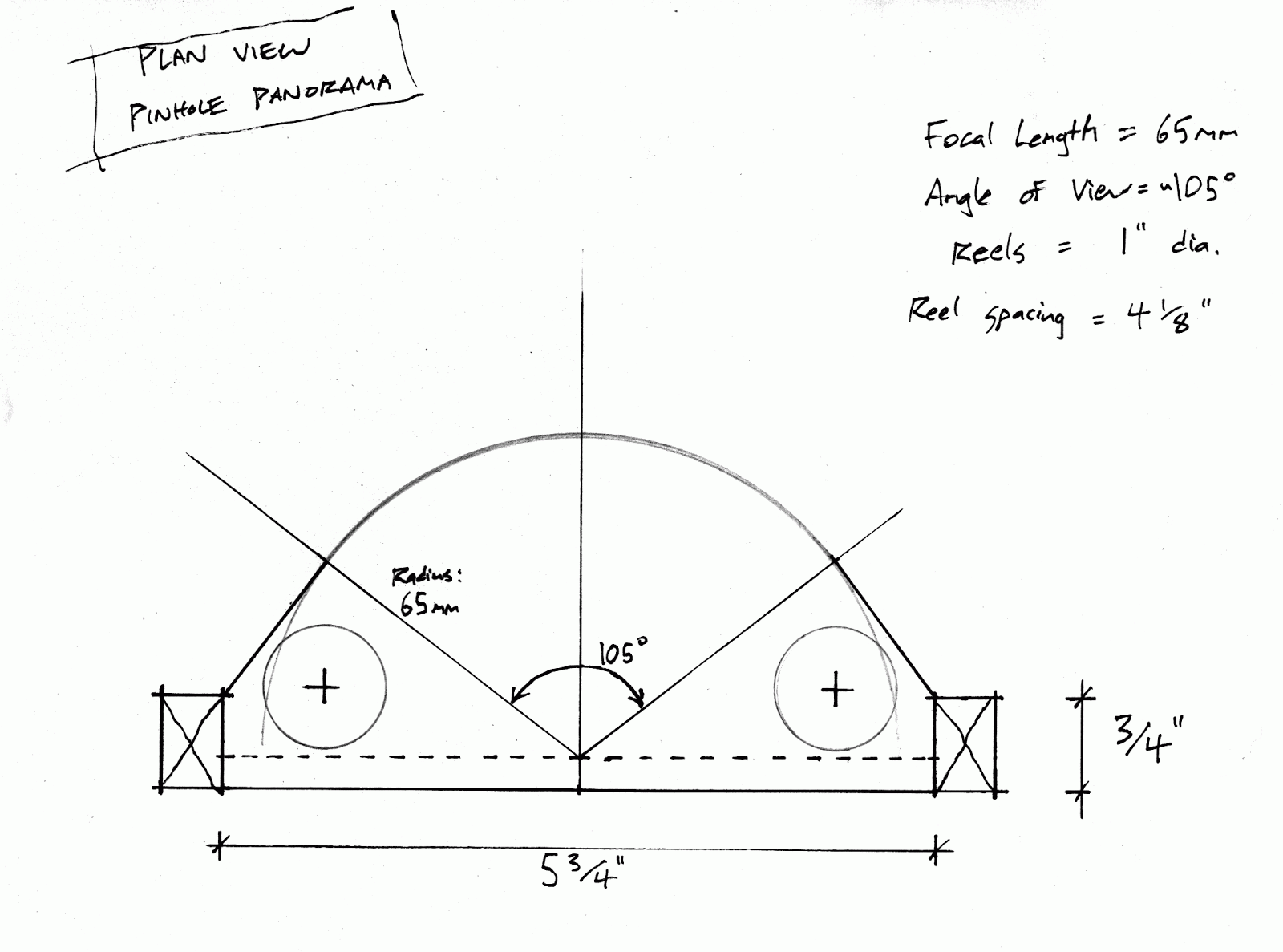
3) Weekend project - Pinhole Panoramic Camera:
PDF panoramic pinhole on makezin.com
and Website: makezine.com

~ drawing of the panoramic camera (c) Ross Orr ~
4) A pinhole camera inside an egg:
the-egg-pinhole-camera on lomography.com
and website: www.francescocapponi.it

~ pinhole egg (c) www.francescocapponi.it ~

5) The Dippold pinhole camera. Download a plan with instructions and template for a serious cardboard camera:
6) The Battlefield Pinhole Camera – load and expose 3 rolls of films at the same time within one camera:
the-battlefield-camera on lifehacker.com

~ The Battlefield pinhole camera - (c) Steven Monteau ~

7) The Blinky camera kit – designed by two ladies from France and the UK: the blinky camerakit
~ Blinky the pinhole camera - (c) http://blinkythepinholecamera.tumblr.com ~

8) DIY project: “Converting a cheesy focus-free 35mm into a pinhole camera”
plastic pinhole cam on silverbased.org

~ Choosing the right pinhole - (c) silver based.org ~

9) A pinhole camera existing only of photographic paper:
website: www.papercams.com

14 oktober 2012

Pinhole cows with an Agfa Click I

I have rebuild an old Agfa Click I camera into a pinhole camera. I removed the plastic lens and placed the pinhole on the outside of the body but behind the original shutter. This camera and the Agfa Clack can be converted easely into pinhole cameras. The Clack has a slightly curved filmplane and a negative size of 6x9 cm. The Click I has a negative size of 6x6 cm. Both use 120 rollfilm.


I  loaded it with Fuji NPC 160 rollfim and went into the fields on a very hot day for a testdrive. I found some cowes willing to pose for a few pictures. I placed my camera in the field and let the cows come close.
They are very nosy animals....


Exposure time was about 30 seconds on the middle of the day in the full (and hot!!) sun. These were the results:


Check the Pinhole Photography & Cameras Group on LinkedIn for more info on pinhole cameras.


23 september 2012

Making dry plate glass negatives with a LF camera


I followed a course in making dry plate negatives (on glass plates) yesterday given by Dutch photographer Norman Post. It's a very nice and old technique.
I made these 2 portraits with this technique:


- Iso = 1 (yes: only one!)
- Exposure time = 1 second
- Apperture = f /4.5
- location = outdoors in the shade.

I used an old Russian large format camera: FKD 13x18 (almost 5x7") with an Industar 215 mm lens and an Industar 300 mm lens.


I'm gonna use this technique with my own FKD 18x24 cm LF camera (almost 8x10") and with my self build wooden pinhole cameras. These glass plate negatives are perfect for contact printing (like cyanotype or gum printing).

See flick.com for my images.

See some of the portraits made by Norman Post (scanned from dry plate negatives).

(photo made by Norman Post)

Check the Pinhole Photography & Cameras Group on LinkedIn for more info on pinhole cameras.